
Electronics & Communication Engineering
Department Overview
Electronics Engineering is one of the largest and fastest growing field of engineering. It covers a wide range of applications which make our life easier and enjoyable such as Television, Radio, computers, telecommunication etc. They help us see, hear and communicate over vast distances and do things faster. Electronics has a major role in improving productivity in industries like oil, energy, agriculture and so many other important sectors of economy. In steel, petroleum and chemical industries it is the electronic devices that direct, control and test production processes. Health care industry depends on electronic instruments to perform chemical tests and to check body functions. The safety in transportation, factories, mines and homes relies heavily on electronics. The uses are endless.
An Electronics engineer must find new solutions to the practical problems affecting our daily lives. An electronics engineer will work in a team with other specialists to design, fabricate, produce, test and supervise the manufacture of complex products and systems — electronic equipment and components for industries including hospitals, computer industry, electronic data processing systems for communication, and defence. They supervise production and manufacturing processes and oversee installation and maintenance. Electronics engineers work with devices that use extremely small amounts of power — microprocessors, fiber optics, and systems in telecommunication, television, radio, and beyond.
Electronics engineering is a constantly changing and widening branch of the engineering profession. The electronics industry, being labour intensive, provides many job opportunities for skilled candidates. Increased production and demand by government and businesses for communication equipment, computers, and military electronics — along with consumer demand and growing research in robotics and automation — continues to drive employment growth. Candidates with a creative and inventive mind and a strong grounding in physics and mathematics will find electronics engineering a challenging and lucrative career.
Objectives of the Course
- An ability to apply knowledge of mathematics, science and engineering to electronics and communication engineering problems.
- An ability to design and conduct experiments and to analyse and interpret gathered data.
- An ability to function in and/or develop leadership in multi-disciplinary teams.
- An ability to identify, formulate and solve electronics and communication engineering problems.
- An understanding of ethical and professional responsibility.
- An ability for effective communication.
- An ability to understand and correctly interpret the impact of engineering solutions in a social/global context.
- An ability to engage in life-long learning to follow developments in electronics and communication engineering.
- A knowledge and understanding of contemporary issues.
- An ability to skilfully use modern engineering tools and techniques necessary for engineering design, analysis and applications.
- A recognition of the need for quality.
- An ability to function individually as well as be part of a team.
Courses Available
B.Tech. Electronics & Communication
The core objective of the B.Tech (ECE) programme is to equip students with the necessary core competency to succeed long-term in engineering and entrepreneurship careers, and to prepare them to undertake postgraduate studies and research. B.Tech is one of the best engineering courses for students seeking a career in the field of electronics and communication.
Our curriculum is directed to applications in major areas such as telecommunications, energy and electronics sectors, electrical engineering, and embedded programming — while encouraging the development of necessary skills for integration of hardware and software components. We believe that many creative opportunities exist at the boundaries of traditional CSE and ECE, and have accordingly planned for cross-training of students across disciplinary boundaries.
A palpable excitement surrounds our department of ECE. The enthusiasm pervades every classroom and lab, invigorating students with innovative ideas. Liaison with industry, major research establishments, and learned societies ensures that courses continue to meet the changing needs of the profession. The department is well equipped with all the gadgets, instruments and software required for experiments. Project work throughout the course underpins the necessity for a combination of practical and theoretical skills and abilities. The department provides a six-week summer training programme on embedded systems to give students comprehensive theoretical and practical background so that they are constantly aware of the rapid changes taking place in the world of technology.
M.Tech. in Electronics and Communications is a two-year postgraduate degree programme for engineering students. Electronics and Communication Engineering provides detailed study of various semiconductor devices, electromagnetic field theory, embedded system design, optical fiber communication, microwave and radar communication, control system and PCB designing. Students can easily get jobs after M.Tech in ECE as Electronics Engineer, Production Manager, Electronics Hardware Development Engineer, Network Specialist, Electronics and Communications Engineer, Data Analyst, etc., in numerous private or government organisations.
The department has always strived to inculcate the best in the students so that they can face the challenges offered by the industry. Electronics & Communication Engineering continues to be a growing field, as indicated by the current demand for graduates. The Department of Electronics & Communication was set up with the aim of nurturing students into highly skilled engineers possessing extensive knowledge in the field of electronics.
We aim to prepare students for a career as professional engineers through an education where fundamental principles are presented in the context of real application and design. In an age when electronics play a major role in daily life and the promise of nanotechnology is coming to fruition, it is truly a great time to be a part of ECE. Liaison with industry, major research establishments, and learned societies ensures that courses continue to meet the changing needs of the profession.
The department is well equipped with all the gadgets, instruments and software required for experiments. Project work throughout the course underpins the necessity for a combination of practical and theoretical skills and abilities. The department provides a six-week summer training programme on embedded systems to give students comprehensive theoretical and practical grounding so that they remain constantly aware of the rapid changes taking place in the world of technology.
Courses and Subjects
| Sem | Course/Subject | Code | Marks Theory | Marks Practical | Course Faculty |
|---|---|---|---|---|---|
| 3 | Signals and Systems | PCC-ECE-209-G | 75 | 25 | Ms. Gulrukh |
| 3 | Electronic Devices | PCC-ECE-210-G | 75 | 25 | Ms. Gulrukh |
| 3 | Data Structure | PCC-CSE-221-G | 75 | 25 | Ms. Archana |
| 3 | Network Theory | PCC-ECE-211-G | 75 | 25 | Dr. Sonu Rana |
| 3 | Economics for Engineers | HSMC-01G | 75 | 25 | Ms. Neeraj |
| 3 | Environmental Science | MC-106G | 75 | 25 | Dr. Rimmi |
| 3 | Network Theory Lab | LC-ECE-212-G | 25 | 25 | Ms. Neha Mathur |
| 3 | PCB Workshop | LC-ECE-213G | 50 | 50 | Dr. Sonu Rana |
| 3 | Electronic Devices Lab | LC-ECE203G | 25 | 25 | Ms. Gulrukh |
| 4 | Digital Electronics | PCC-ECE205G | 75 | 25 | Ms. Gulrukh |
| 4 | Digital Electronics Lab | LC-ECE207G | 25 | 25 | Ms. Gulrukh |
| 4 | Organizational Behaviour | HSMC-02G | 75 | 25 | Dr. Monika |
| 4 | Analog Circuit | PCC-ECE206G | 75 | 25 | Ms. Archana Dahiya |
| 4 | Analog Circuit Lab | LC-ECE-208G | 25 | 25 | Ms. Archana Dahiya |
| 4 | Microcontroller | PCC-ECE201G | 75 | 25 | Ms. Vimal |
| 4 | Microcontroller Lab | LC-ECE-214G | 25 | 25 | Ms. Vimal |
| 4 | Communication System | PCC-ECE202G | 75 | 25 | Ms. Mona Gaur |
| 4 | Communication System Lab | LC-ECE204G | 25 | 25 | Ms. Mona Gaur |
| 5 | Electromagnetic Waves | PCC-ECE301G | 75 | 25 | Ms. Mona Gaur |
| 5 | Linear IC Application | PEC-ECE-313-G | 75 | 25 | Ms. Archana Dahiya |
| 5 | Communication Engineering | PCC-ECE-305-G | 75 | 25 | Ms. Vimal |
| 5 | DSP | PCC-ECE-307-G | 75 | 25 | Ms. Gulrukh |
| 5 | Computer Organization & Architecture | PCC-ECE303G | 75 | 25 | Ms. Archana Rohilla |
| 5 | Object Oriented Programming with C++ | OEC-ECE317G | 75 | 25 | Ms. Rakhi |
| 5 | DSP Lab | LC-ECE327G | 25 | 25 | Ms. Gulrukh |
| 5 | EM Lab | LC-ECE323G | 25 | 25 | Ms. Mona Gaur |
| 6 | Control System | PCC-ECE302G | 75 | 25 | Dr. Devjani Bhattacharya |
| 6 | Control System Lab | LC-ECE324G | 25 | 25 | Dr. Devjani Bhattacharya |
| 6 | Engineering Ethics | HUM-ECE-306G | 75 | 25 | Ms. Mona Gaur |
| 6 | Computer Network | PCC-ECE304G | 75 | 25 | Ms. Vimal |
| 6 | Computer Network Lab | LC-ECE322G | 25 | 25 | Ms. Vimal |
| 6 | Python Programming | OEC-ECE318G | 75 | 25 | Dr. Mukesh Yadav |
| 6 | CMOS Design | PCC-ECE308G | 75 | 25 | Ms. Gulrukh |
| 6 | VHDL and Digital Design | PEC-ECE312G | 75 | 25 | Ms. Mona Gaur |
| 7 | Mobile Communication and Networks | PEC-ECE-410-G | 75 | 25 | Dr. Sonu Rana |
| 7 | DCNS | PEC-ECE-411-G | 75 | 25 | Ms. Archana Dahiya |
| 7 | Fiber Optic Communication | PCC-ECE-401G | 75 | 25 | Ms. Gulrukh |
| 7 | Antenna and Wave | PCC-ECE-402-G | 75 | 25 | Dr. Sonu Rana |
| 7 | Wireless Sensor Networks | PEC-ECE-413-G | 75 | 25 | Ms. Vimal |
| 7 | DCNS Lab | LC-ECE-405-G | 25 | 25 | Ms. Archana Dahiya |
| 8 | Microwave Theory & Technique | PCC-ECE-404-G | 75 | 25 | Ms. Mona Gaur |
| 8 | Satellite Communication | PCC-ECE-403-G | 75 | 25 | Dr. Sonu Rana |
| 8 | Wireless & Satellite Communication Lab | LC-ECE-406-G | 25 | 25 | Dr. Sonu Rana |
| 8 | Embedded System | PEC-ECE-415-G | 75 | 25 | Ms. Gulrukh |
| 8 | Solid & Hazardous Waste Management | OEC-CE-402-G | 75 | 25 | Ms. Rita |
Faculty
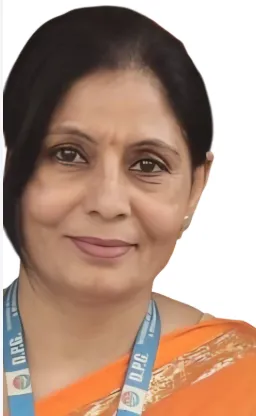
Dr. Sonu Rana
Head of Department
Electronics & Communication EngineeringDr. Sonu Rana
Head of Department & Assistant Professor
Department of ECE
- Teaching: 19 Years
- SCI Indexed: 04
- Scopus Indexed: 02
- Conferences: 06
- Patents: 02
Qualifications
- Ph.D. Electronics & Communication Engineering (2024), MRIIRS, Faridabad
- M.Tech., MDU Rohtak (2012)
Achievements & Awards
Received Best Paper Award at International Conference ICSETI-2026, organised by JSS Academy of Technical Education Noida and technically co-sponsored by IEEE UP Section.
Research Profiles

Contact
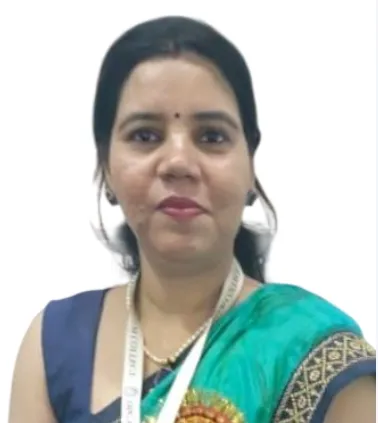
Ms. Mona Gaur
Assistant Professor
Electronics & Communication EngineeringMs. Mona Gaur
Assistant Professor
Department of ECE
- Teaching: 12+ Years
- Conferences: 06
Qualifications
- M.Tech (2012) – IP University
- B.Tech (2008) – MD University
Contact
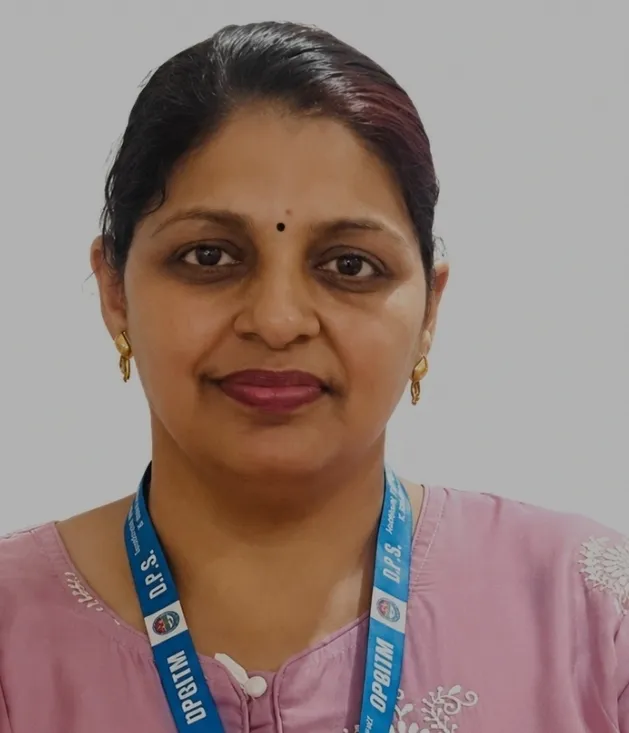
Ms. Archana
Assistant Professor
Electronics & Communication EngineeringMs. Archana
Assistant Professor
Department of ECE
- Teaching: 14 Years
- Industry: 3 Years
- Conferences: 03
- Patents: 01
Qualifications
- Ph.D. (Pursuing) — IFTM, Moradabad
- M.Tech. (2015), DPGITM, Gurugram
Contact
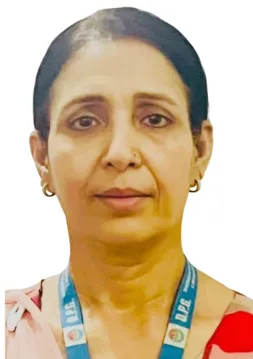
Ms. Gulrukh Shahab
Assistant Professor
Electronics & Communication EngineeringMs. Gulrukh Shahab
Assistant Professor
Department of ECE
- Teaching: 10 Years
- Industry: 6 Years
- Conferences: 02
Qualifications
- M.Tech. (2023), DPGITM, Gurugram
- MBA (2014), MDU Rohtak
- B.Tech. (2005), IETE, Delhi
Contact
Vision & Mission
Vision
To produce creative, innovative and skilled Electronics & Communication Engineers with ethical integrity, morality and technical focus to meet socio-economic needs.
Mission
- Establish a unique learning & teaching process to provide deep knowledge and prepare students to face the challenges of the Electronics & Communication field.
- Enable students to develop skills to solve complex technological problems through innovation and group learning experiences that enhance skills, leadership quality and employability.
- Inculcate a self-learning attitude through experiential learning and imbibe the spirit of responsible professionalism by making students technically sound.
- Provide a creative, motivating and innovative environment for students’ technical, social and ethical development.
PEOs, PO’s and PSOs
Programme Educational Objectives (PEOs)
- Students will attain a strong background of electronics and communication engineering fundamentals required for problem-solving, helping them compete in the real world.
- Graduates will be motivated to exhibit their innovative and technical skills to meet day-to-day technical challenges, giving them the confidence and courage to succeed.
- Ethics, professional attributes, positive attitude, effective communication, and presentation skills will be imbibed, along with a sense of responsibility that helps students take independent decisions — enhancing integrity and employability.
- Students will be provided with an innovative, ethical and academic environment that ignites their spirit to achieve excellence and shape their passion.
Programme Specific Outcomes (PSOs)
- PSO1: Students will be able to apply the concepts of Electronics & Communication Engineering to design and implement complex systems in Analog and Digital Electronics, VLSI, Signal Processing, Embedded Systems and Communication.
- PSO2: Students will be able to apply their acquired technical knowledge for a successful career and to qualify competitive examinations at the national and global level.
- PSO3: Students will be able to contribute to society as responsible Electronics & Communication Engineers by using their technical knowledge, leadership quality, management skills, and ethical and moral values.
Employment Opportunities
Electronics and Communication Engineering graduates are in demand across a wide spectrum of industries — from semiconductors and telecom to defence, space research, and software. Below is a structured overview of career paths available after B.Tech/M.Tech ECE.
Core Career Roles
- Hardware Design Engineer: Applications ranging from consumer electronics to industrial machinery.
- Embedded Systems Engineer: Applications such as automotive electronics, medical devices, IoT devices, and industrial automation.
- Analog and Digital Circuit Designer: Applications in signal processing circuits, microcontroller-based systems, communication interfaces, and power electronics.
- Test and Validation Engineer: Works with testing equipment and data analysis tools across product development cycles.
- Research and Development Engineer: Develops new technologies, improves existing products, and explores emerging trends in electronics and related fields.
- Quality Assurance Engineer: Ensures the reliability, durability, and performance of electronic products through testing, inspection, and quality standards.
- Entrepreneur/Startup Founder: Starts own businesses or joins startups, developing new products or technologies based on electronics expertise.
Private Sector — Leading Companies Recruiting ECE Graduates
| S.No. | Company Name | ECE Core Area |
|---|---|---|
| 1 | Tata Teleservices | Telecommunications |
| 2 | Vodafone | Telecommunications & Networking |
| 3 | Samsung | Analog and Digital Electronics, Communications |
| 4 | Intel | Analog and Digital Electronics |
| 5 | Dell India | Networking |
| 6 | Motorola | Communications |
| 7 | Honeywell | Embedded Systems |
| 8 | LG Electronics | Analog and Digital Electronics |
| 9 | Videocon | Analog and Digital Electronics |
| 10 | Reliance | Communications |
| 11 | Wipro | Wireless and Networking, Telecom, VLSI |
| 12 | Cisco Networking | Computer Networks |
| 13 | Infotech | Analog and Digital Electronics |
| 14 | Philips Electronics | Analog and Digital Electronics |
| 15 | Redpine | Signal Processing, Analog, Digital |
Public Sector — PSUs Recruiting ECE Engineers
These Public Sector Undertakings recruit Electronics and Communication Engineers through GATE scores or their own written examinations.
| PSU Name | Eligibility | Pay Scale (₹) | Selection Process |
|---|---|---|---|
| Bharat Electronics Limited (BEL) | Min. 60% in B.Tech (Gen/OBC); 50% for SC/ST/PWD | 16,400 – 40,500 | GATE + GD + Interview |
| National Aluminium Company (NALCO) | Min. 65% in B.Tech (Gen/OBC); 55% for SC/ST/PWD | 16,400 – 40,500 | GATE + GD + Interview |
| Hindustan Petroleum (HPCL) | Min. 60% in B.Tech (Gen/OBC); 50% for SC/ST/PWD | 24,900 – 50,500 | GATE + GD + Interview |
| Bharat Heavy Electricals (BHEL) | Min. 60% in B.Tech or 5-year Integrated M.Tech | 20,600 – 46,500 | GATE + GD + Interview |
| Bharat Petroleum (BPCL) | Min. 60% (Gen/OBC); 50% for SC/ST/PWD | 24,900 – 50,500 | GATE + GD + Interview + Psychometric Test |
| Oil & Natural Gas Corporation (ONGC) | Min. 60% in Engg/Science subjects | 24,900 – 50,500 | Written + Interview |
| National Thermal Power Corp (NTPC) | B.Tech with min. 65% (Gen); 55% for SC/ST/PWD | 24,900 – 50,500 | GATE + Interview |
| Coal India Limited (CIL) | Min. 60% in B.Tech/AMIE | 20,600 – 46,500 | Written + Interview |
| Power Grid Corporation (POWERGRID) | Min. 65% in B.Tech (Gen/OBC); 50% for SC/ST/PWD | 24,900 – 50,500 | GATE + GD + Interview |
| Neyveli Lignite Corporation (NLC) | Degree with 60% (UR/OBC); 50% for SC/ST | CTC ₹8.12 Lakhs | Written + Interview |
| Bharat Sanchar Nigam (BSNL) | Engineering Degree | 16,400 – 40,500 | Written + Interview |
Indian Engineering Services (IES)
IES is one of the most prestigious career paths for engineers in India, equivalent to IAS in administration. Selection is through the Engineering Services Examination (ESE) conducted by UPSC. ECE graduates qualify for the following posts:
- Indian Railway Service of Signal Engineers
- Indian Railway Stores Service (Telecommunication/Electronics Engineering Posts)
- Indian Naval Armament Service (Electronics Engineering Posts)
- Assistant Executive Engineer Group ‘A’ (Electronics & Telecommunication Engineering) in Corps of E.M.E., Ministry of Defence
- Central Power Engineering Service, Group ‘A’ (Electronics and Telecommunication Engineering Service)
- Indian Inspection Service (Asst. Director Grade-I)
- Indian Telecommunication Service Gr. ‘A’
- Junior Telecom Officer (General Central Service Group ‘B’ Gazetted Non-Ministerial)
For details visit: www.upsc.gov.in
Research Institutions
- ISRO (Indian Space Research Organisation): One of the six largest government space agencies in the world. Recruits electronics engineers annually through ISRO ICRB examination and campus placements at premier institutions. www.isro.org
- DRDO (Defence Research and Development Organisation): Responsible for technology development for the Indian military across aeronautics, image processing, electronics, and mechanical engineering. www.drdo.gov.in
- BARC (Bhabha Atomic Research Centre): Manages all aspects of nuclear power generation including reactor design, simulation, risk analysis, and fuel material development. Recruits through GATE scores or BARC written examination. barc.gov.in/careers
Clubs
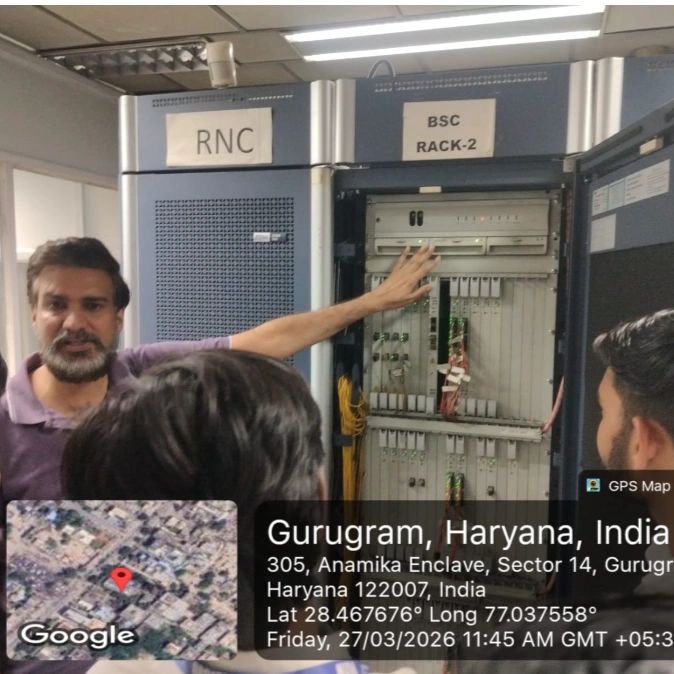
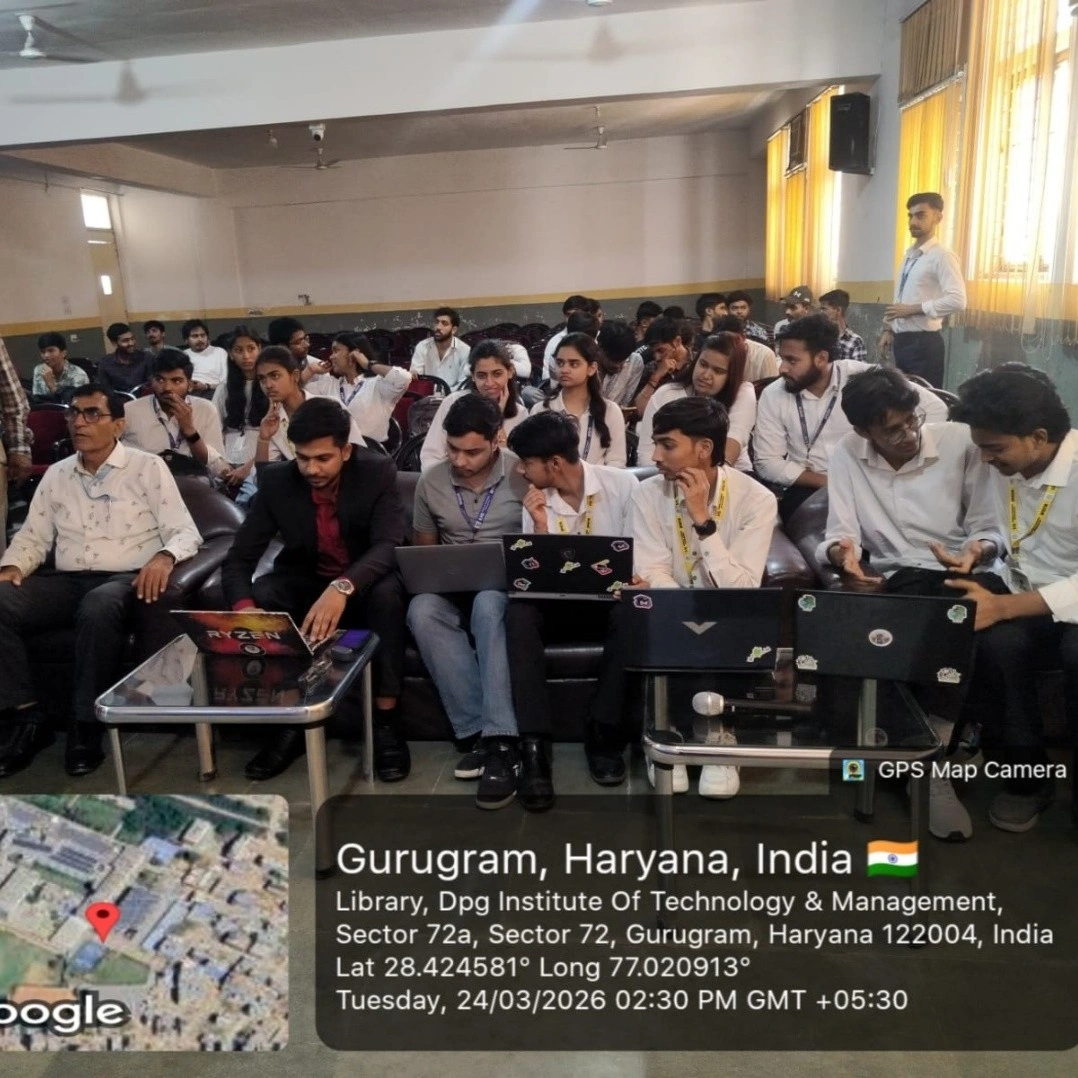
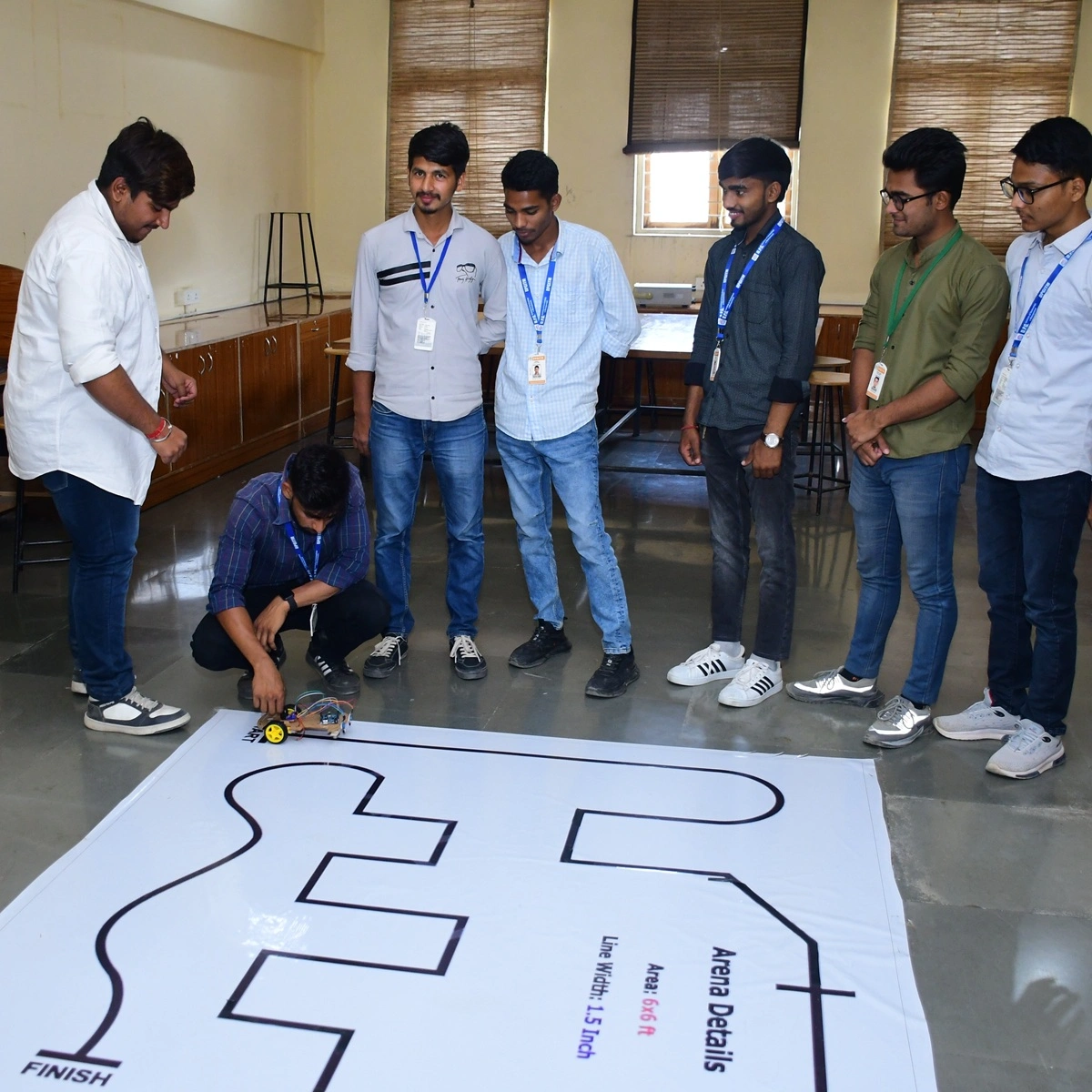
Technical Club — IoT and Smart Systems Club
Faculty Coordinator: Ms. Mona Gaur (Assistant Professor, ECE Department)
Student Coordinators: Muskan, Om Parkash (3rd and 2nd Year Students)
Objectives
- To develop knowledge and skills in Internet of Things (IoT) and smart technologies.
- To encourage students to design and implement IoT-based real-world applications.
- To promote innovation in embedded systems, sensors, and automation technologies.
- To bridge the gap between theoretical learning and industry-oriented smart solutions.
- To foster interdisciplinary learning in areas like electronics, communication, and software integration.
Activities Conducted
- Workshops on IoT platforms (Arduino, Raspberry Pi, NodeMCU, etc.)
- Hands-on training sessions on sensor interfacing and smart device development
- Mini-project development on smart home, smart agriculture, and automation systems
- Technical competitions, hackathons, and IoT-based project exhibitions
- Guest lectures/webinars by industry experts in IoT and smart technologies
- Participation in national/international IoT challenges and innovation contests
Outcomes
- Enhanced practical knowledge in IoT systems and smart technologies
- Development of real-time IoT-based projects and prototypes
- Improved programming, hardware interfacing, and system integration skills
- Increased student participation in technical events and competitions
- Better preparedness for careers in IoT, embedded systems, and automation industries
Non-Technical Club — Creative Arts & Design Club
Faculty Coordinator: Ms. Archana Dahiya (Assistant Professor, ECE Department)
Student Coordinators: Himanshi and Mehak (Final/Pre-final Year Students)
Objectives
- To nurture creativity and artistic skills among students.
- To provide a platform for expression through visual arts and design.
- To enhance innovation in sketching, painting, digital design, and craft.
- To develop aesthetic sense and cultural awareness among students.
- To encourage participation in intra and inter-college competitions.
Activities Conducted
- Poster Making, Painting, and Sketching Competitions
- Workshops on Graphic Design, Canva, Photoshop, and Digital Art
- Rangoli, Craft, and Exhibition Events during college fests
- Photography and Creative Design Challenges
- Collaboration with Cultural and Media Clubs for events and campaigns
Outcomes
- Improved creativity and artistic expression among students
- Development of design thinking and visualisation skills
- Enhanced student participation in cultural and creative competitions
- Recognition through prizes and certificates at various levels
- Contribution to college branding through creative designs and media
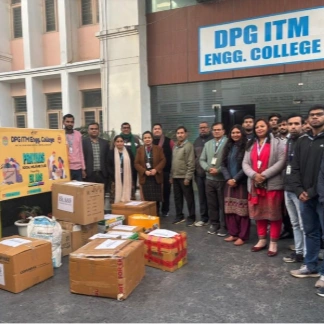
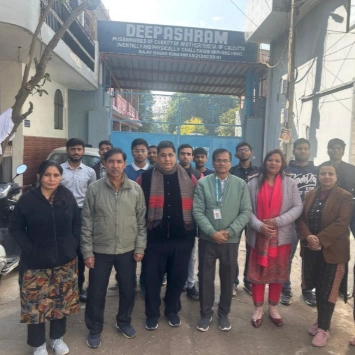
Labs. & Infrastructure
The ECE department at DPGITM is equipped with state-of-the-art laboratories supporting hands-on learning across all semesters. Key laboratories include Analog and Digital Electronics Labs, Microprocessor and Microcontroller Labs, Communication Systems Lab, VLSI Design Lab, Signal Processing Lab, and Embedded Systems/IoT Lab. Each lab is equipped with advanced instruments such as oscilloscopes, function generators, spectrum analysers, FPGA kits, DSP processors, and simulation software like MATLAB. The infrastructure includes high-speed internet connectivity, project development centres, and access to research facilities.
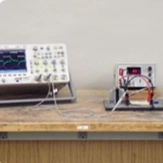
Network Theory (NT) Lab
Focuses on practical verification of electrical network concepts such as Ohm’s Law, Kirchhoff’s Laws, Thevenin’s and Norton’s Theorems, Superposition Theorem, and Maximum Power Transfer Theorem. Students study the behaviour of R, L, and C circuits under different conditions using hands-on experimental setups.
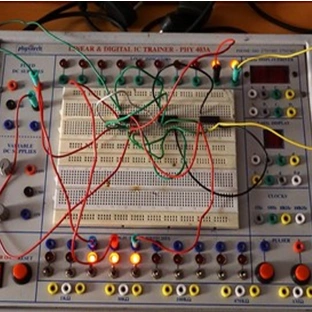
Electronic Devices & Circuits (EDC) Lab
Focuses on studying the characteristics and applications of semiconductor devices — including PN junction diodes, Zener diodes, Bipolar Junction Transistors (BJTs), and Field Effect Transistors (FETs). Students perform experiments on Voltage-Current (V-I) characteristics, transistor configurations (Common Emitter/CE, Common Base/CB, Common Collector/CC), biasing techniques, and amplifier operations.
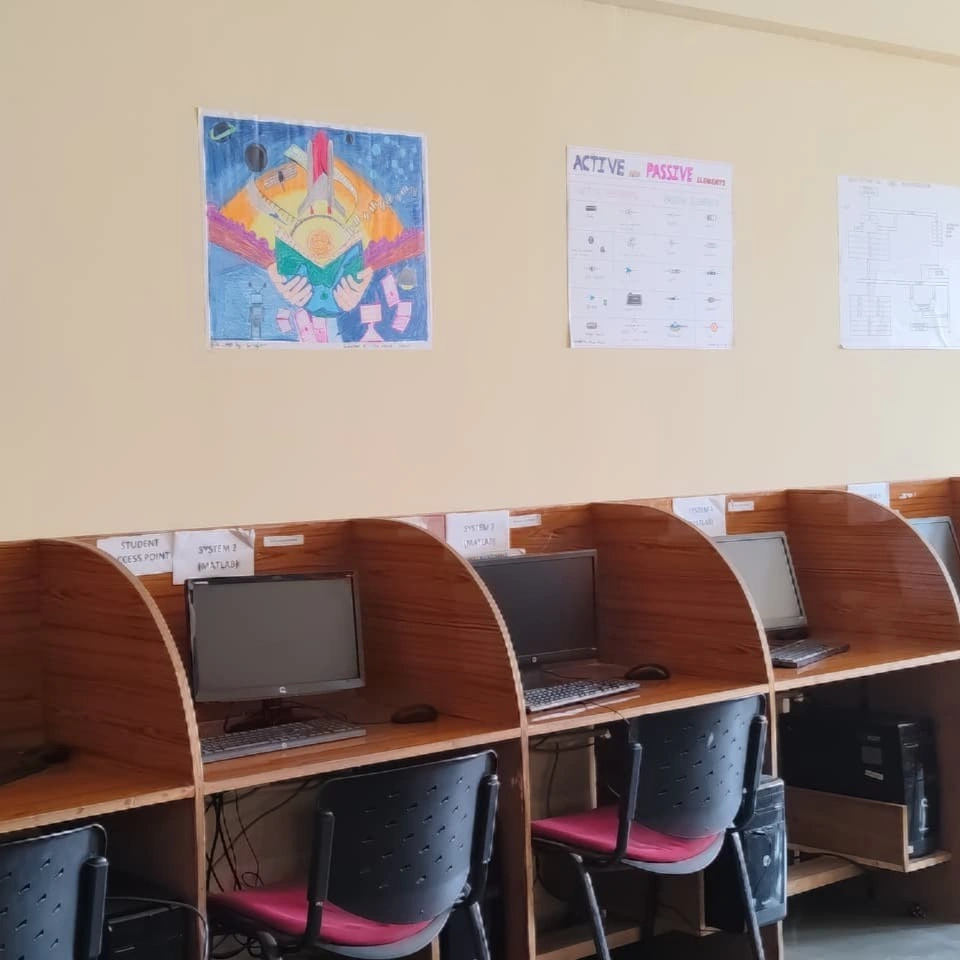
PCB (Printed Circuit Board) Lab
Focuses on designing, developing, and fabricating printed circuit boards used in electronic systems. This lab enhances practical skills in circuit implementation, troubleshooting, and converting theoretical designs into real hardware — a critical industry-readiness skill.
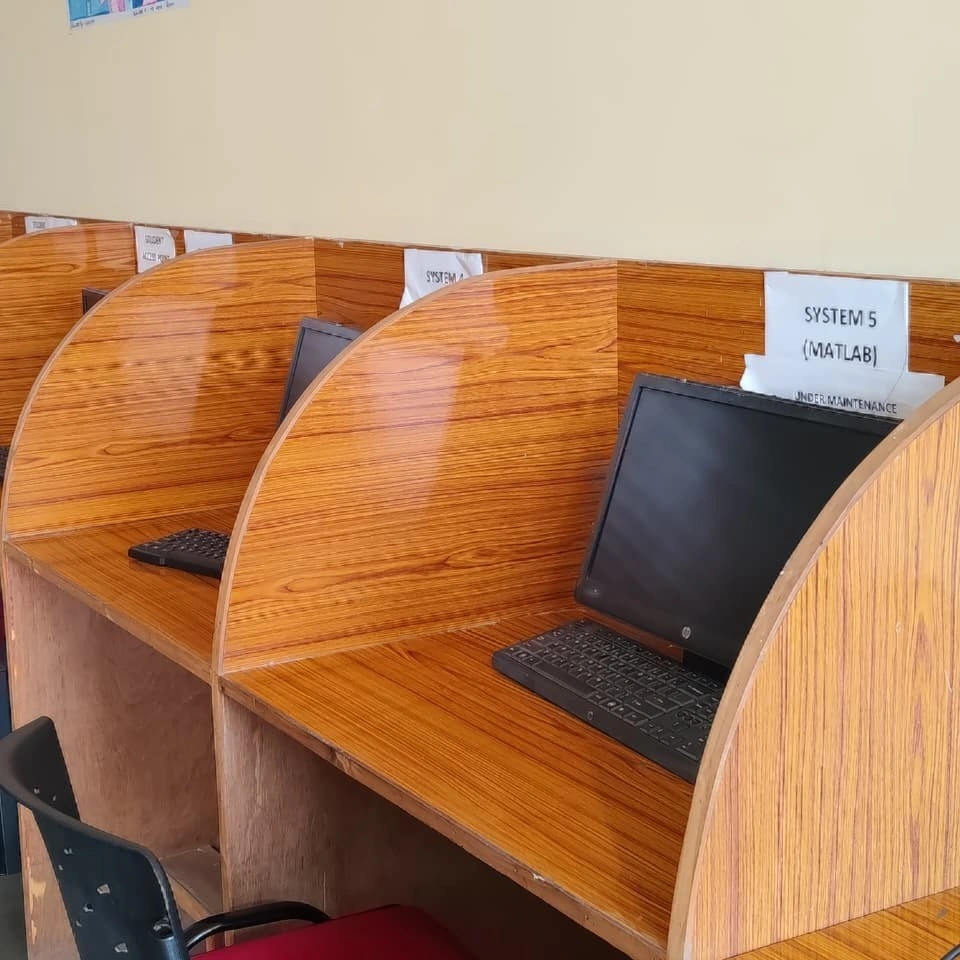
Data Structure Lab
Focuses on implementing fundamental data structures such as arrays, stacks, queues, linked lists, trees, and graphs using programming languages. Students gain proficiency in designing efficient algorithms and understanding their computational complexity.
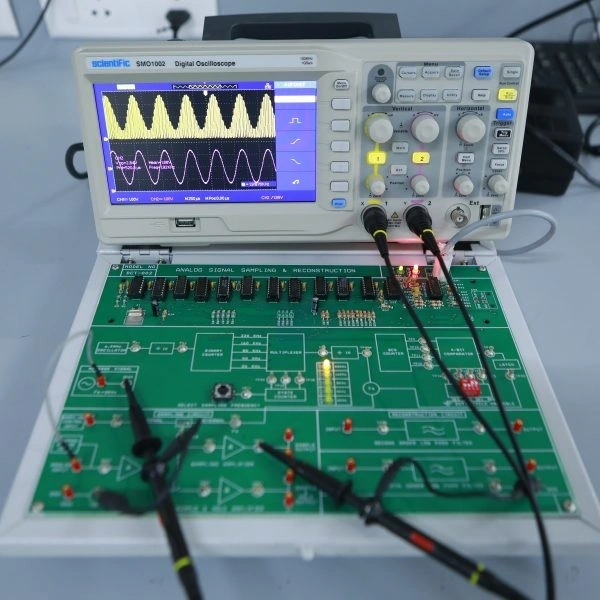
Communication Systems Lab
Students perform experiments on analog and digital communication techniques including modulation, demodulation, and signal analysis. Equipped with signal generators, Cathode Ray Oscilloscopes (CROs), spectrum analysers, and communication trainers — bridging theoretical knowledge with real-world communication systems.
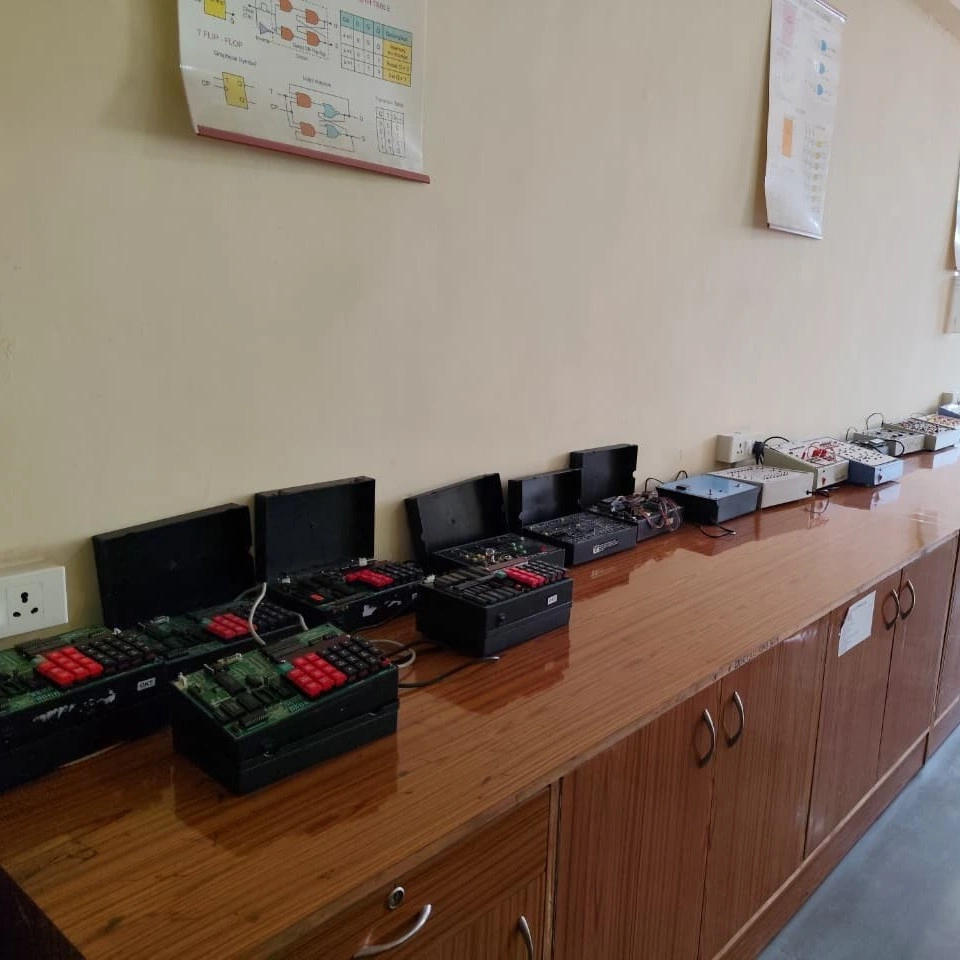
Microcontroller Lab
Focuses on embedded systems using microcontrollers such as the 8051 and Arduino. Students develop and test programmes for interfacing LEDs, sensors, motors, and displays using development boards, programmers, and simulation tools — enabling real-time control and embedded system design.
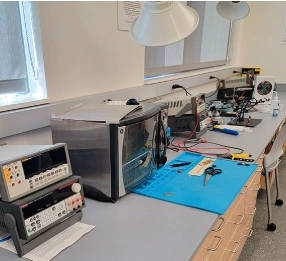
Analog Circuits Lab
Students perform experiments using diodes, transistors, and operational amplifiers to study amplifiers, oscillators, and filters. Equipped with power supplies, Cathode Ray Oscilloscopes (CROs), function generators, and breadboards — strengthening understanding of circuit behaviour and building the foundation for analog electronics.
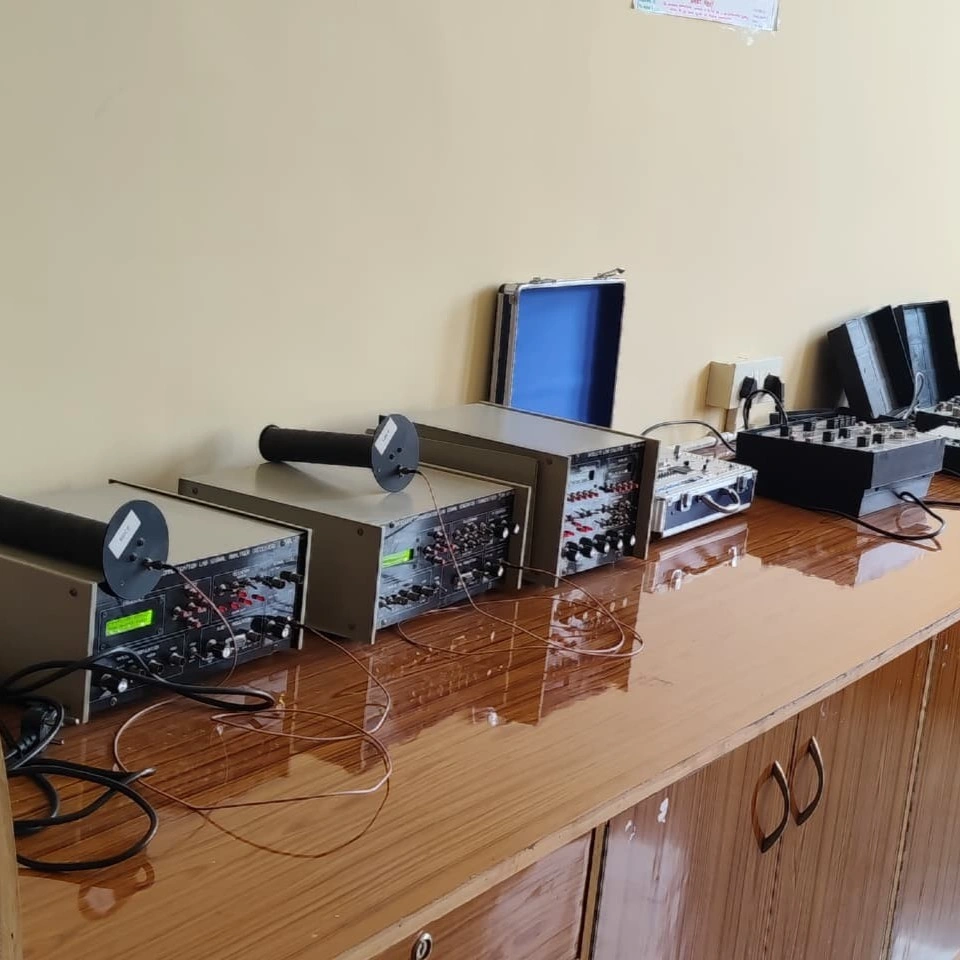
Electromagnetic Waves (EMW) Lab
Equipped with microwave benches, antennas, and Radio Frequency (RF) measurement devices. Students perform experiments on wavelength, Voltage Standing Wave Ratio (VSWR), and radiation patterns — building a strong foundation for wireless communication and antenna systems design.
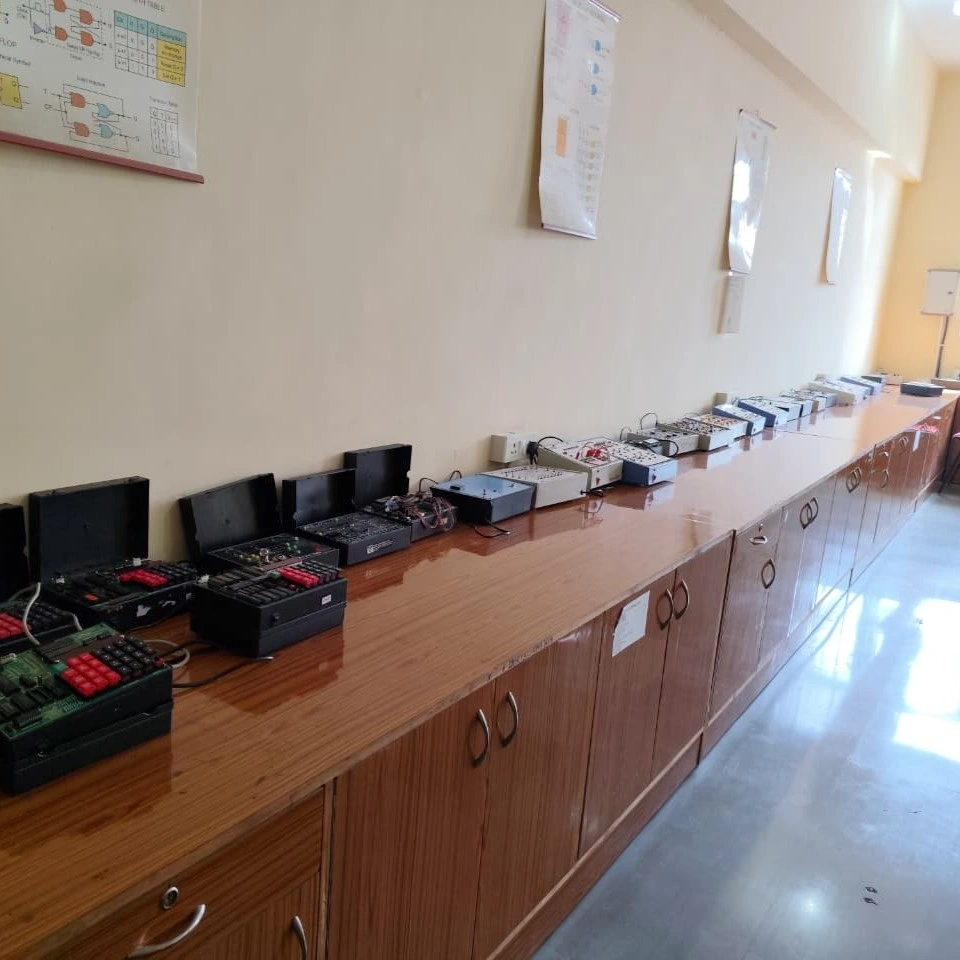
Microprocessor & Peripheral Interfacing (MPI) Lab
Includes experiments using 8085 Microprocessor kits and peripheral devices. Students learn programming, memory interfacing, and I/O operations, and design assembly language programmes — building a strong understanding of embedded and digital systems.
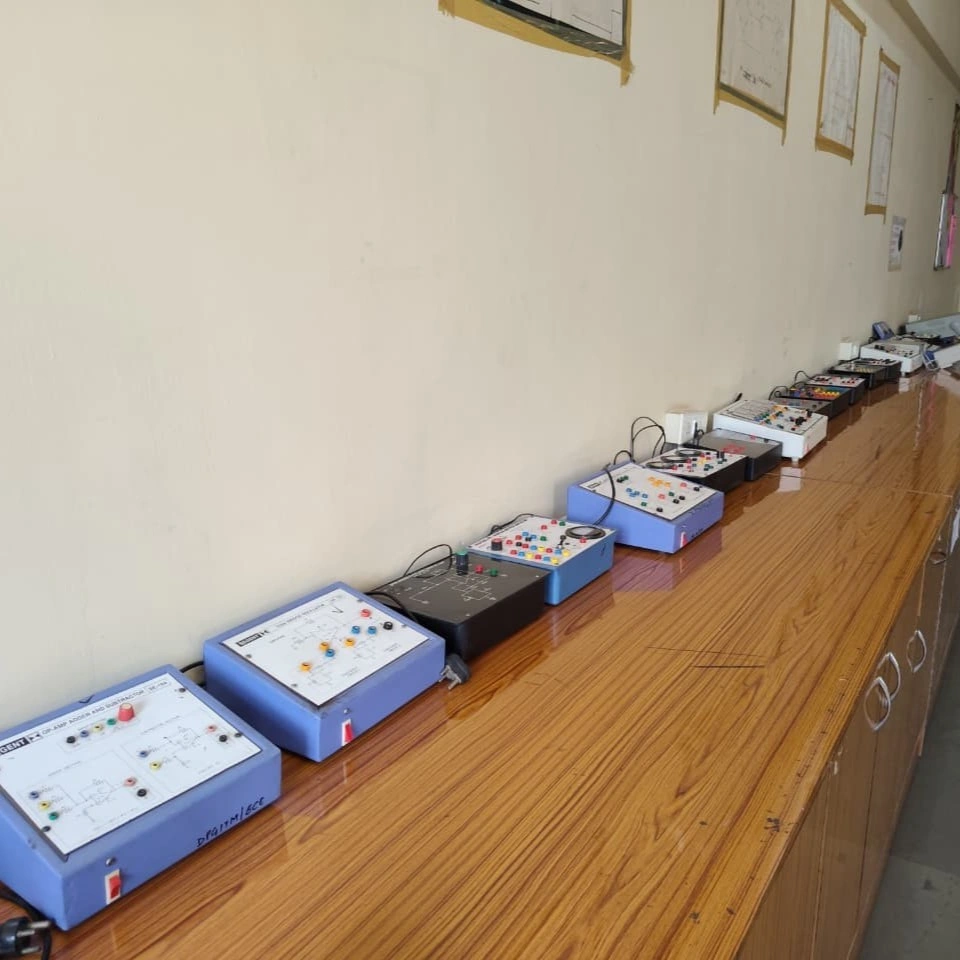
Analog Electronics (AE) Lab
Focuses on the design and analysis of analog circuits. Students perform experiments on diodes, transistors, amplifiers, and oscillators — gaining understanding of circuit behaviour, biasing techniques, and signal amplification for electronic circuit design and communication systems.
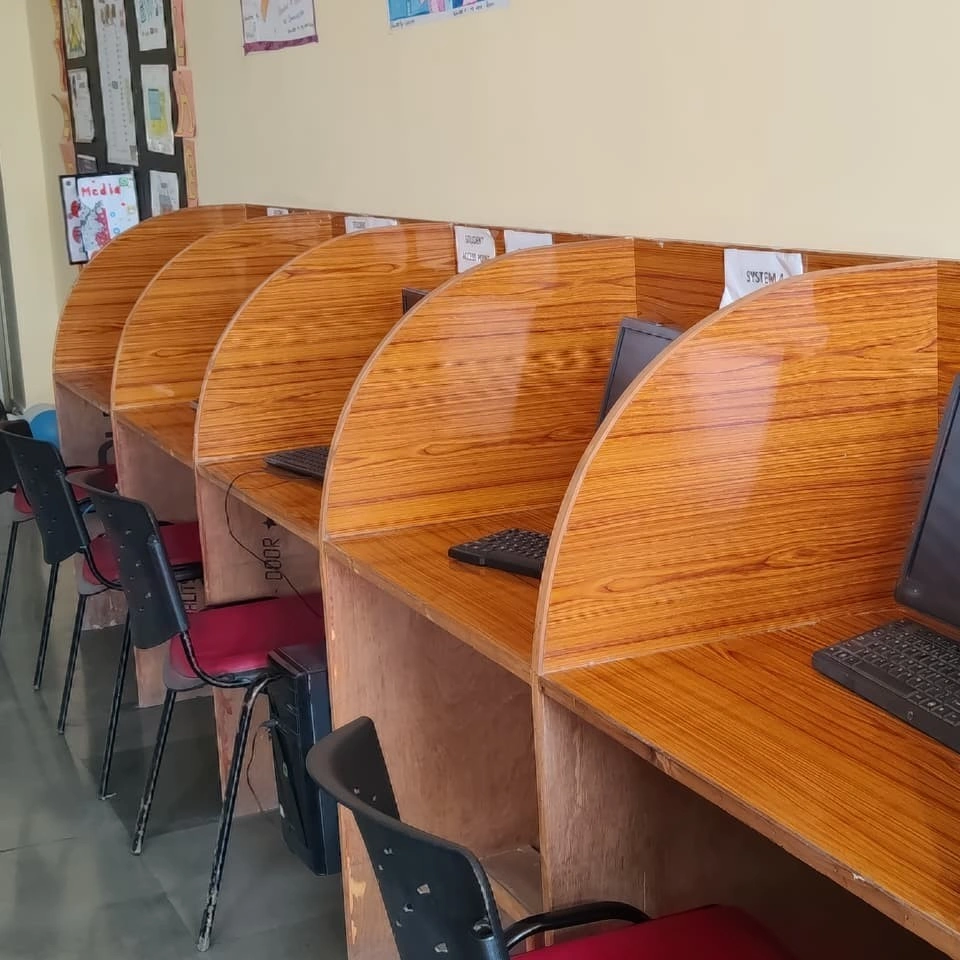
Digital Signal Processing (DSP) Lab
Uses MATLAB to simulate and analyse digital signal processing techniques. Students perform experiments on filtering, FFT, convolution, and signal sampling. Widely applied in communication, audio, and image processing — an essential skill for modern ECE roles.
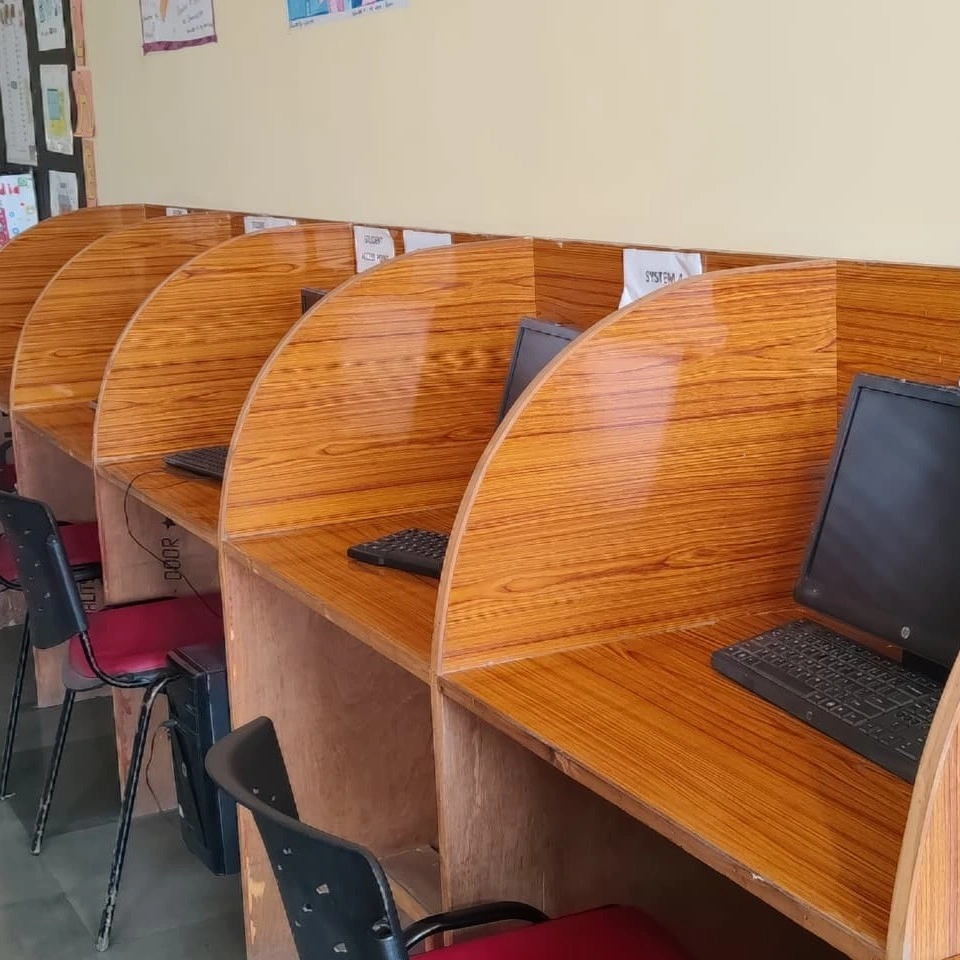
Control Systems Lab
Students perform experiments on transfer functions, stability analysis, and time response. Equipped with control system trainers, servo mechanisms, and data acquisition systems — bridging theoretical control concepts with real-world engineering applications.
Computer Network Lab
Students perform experiments on network configuration, routing, switching, and data transmission using routers, switches, and networking kits. Dedicated to practical work in Computer Networks, Wireless Networks, Mobile Communications, IoT, and Cloud Computing.
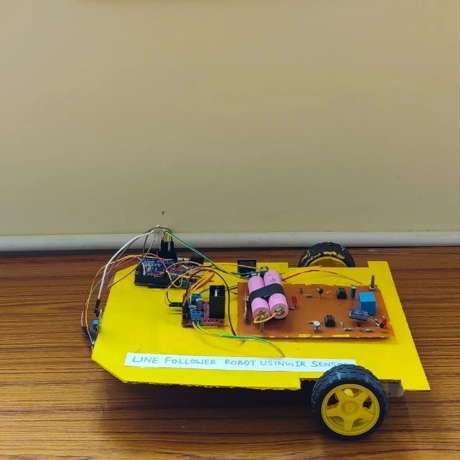
Minor Project Lab
Provides students an opportunity to apply theoretical knowledge to real-world projects. Equipped with essential components, development kits, and software tools for prototyping — enhancing creativity, problem-solving abilities, and practical engineering skills.
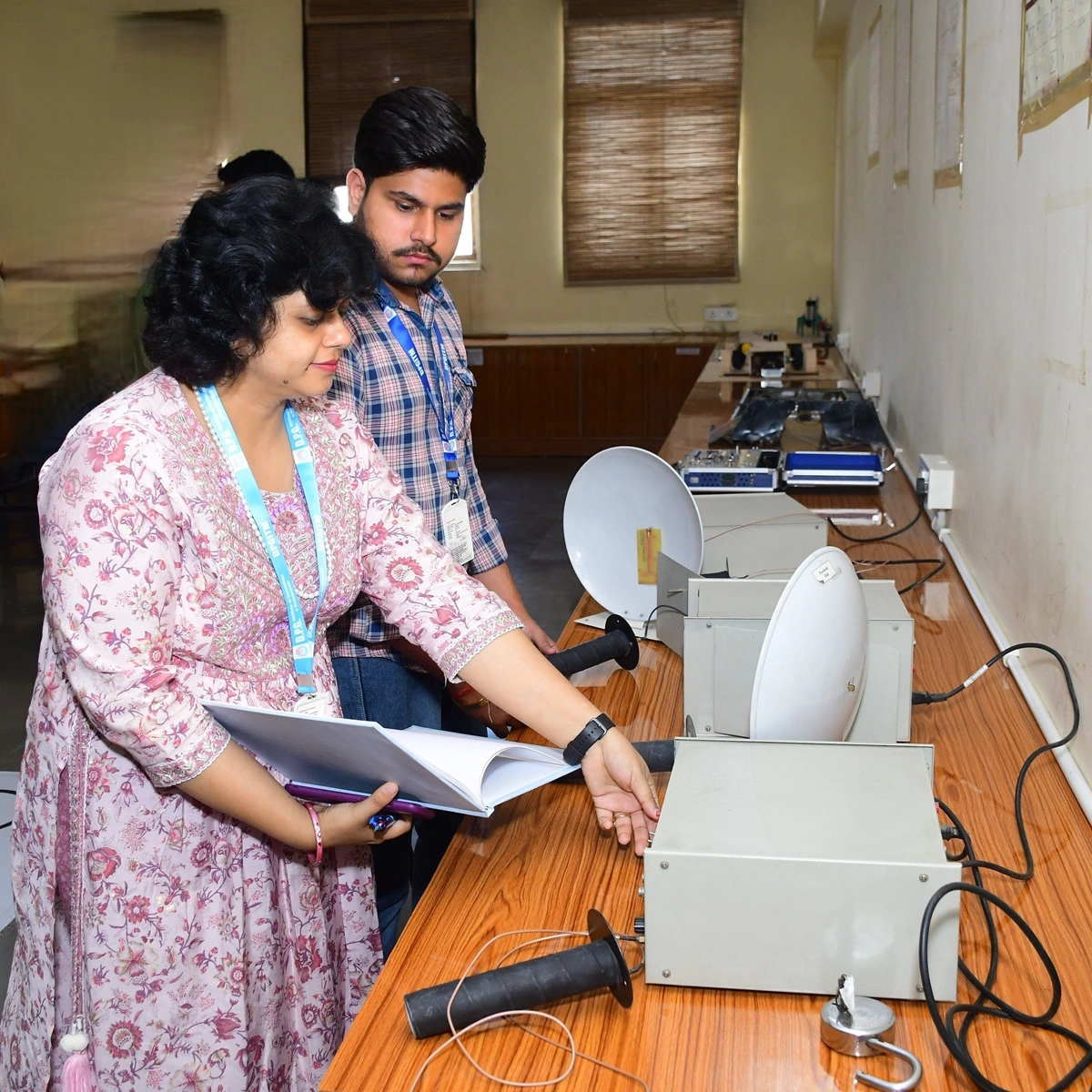
Data Communication Lab
Focuses on the principles of data transmission and networking. Students perform experiments on modulation techniques, error detection, and signal encoding — building a solid foundation in modern communication and networking systems.
Wireless & Satellite Communication Lab
Students experiment with wireless transmission and satellite-based communication — covering modulation techniques, signal propagation, and link analysis. Equipped with Code Division Multiple Access (CDMA) trainer kits, digital satellite communication trainers, and antennas to simulate real-world wireless and space-based communication scenarios.
Wireless & Satellite Communication Lab (Advanced)
Students gain practical exposure to modern wireless systems and satellite communication. Experiments cover modulation, antenna systems, and signal propagation using MATLAB and specialised trainers — simulating wireless networks and satellite links in practical environments.
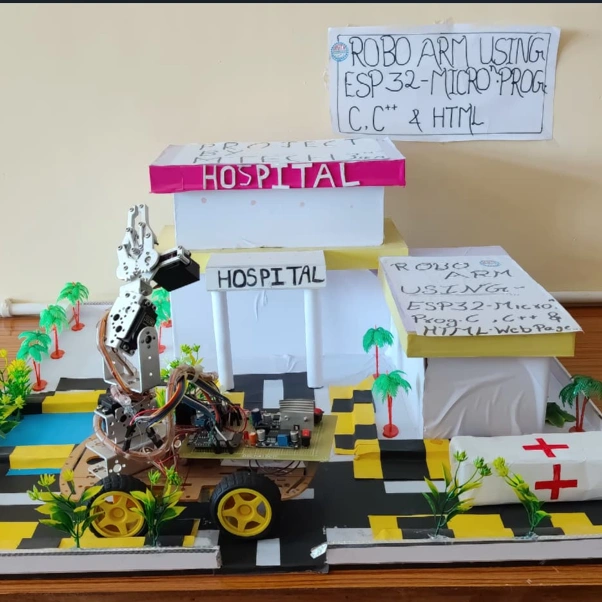
Major Project Lab
Enables students to design and implement comprehensive, real-world engineering solutions using Arduino, Raspberry Pi, and simulation tools such as MATLAB. Provides access to modern hardware, software, and testing facilities — fostering innovation, teamwork, and industry-oriented technical skills.
Highlights of ECE
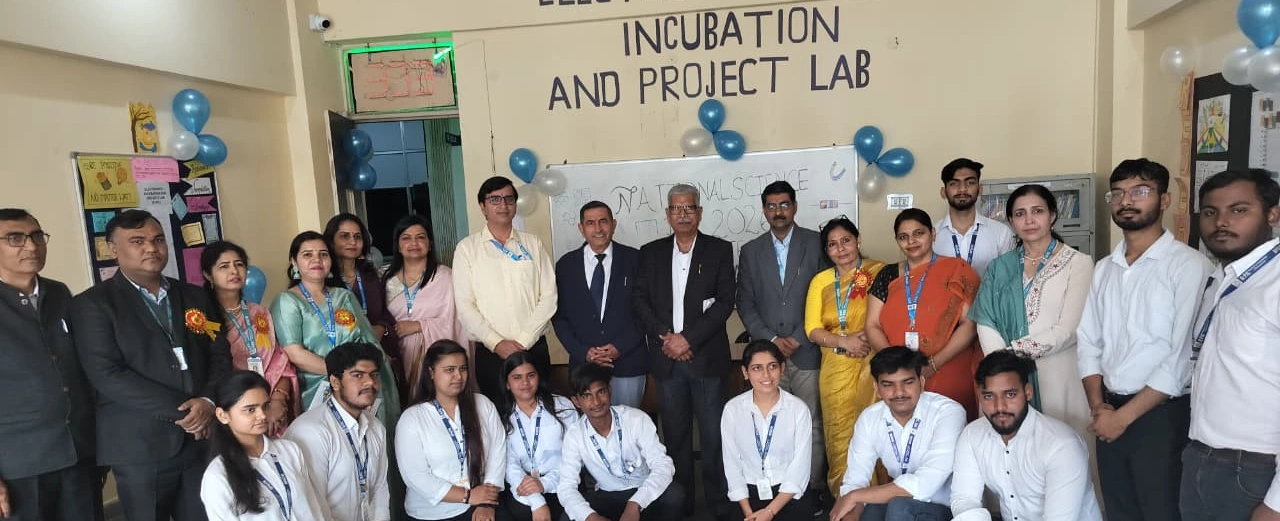
Inauguration of Electronics – Incubation and Project Lab
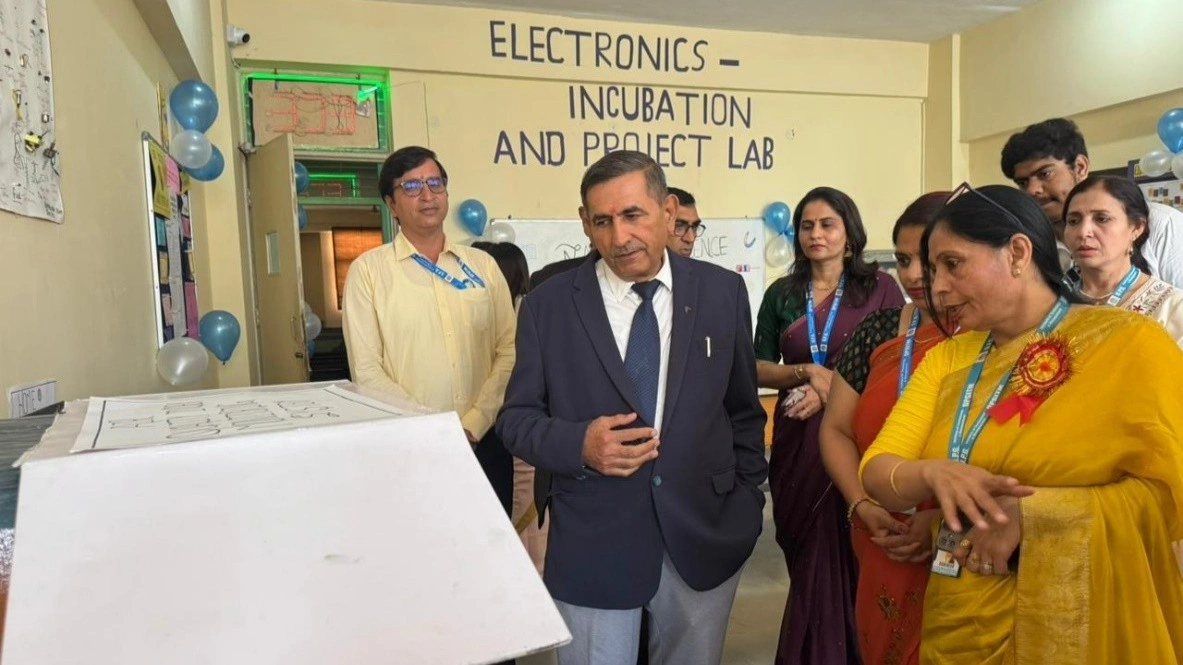
Electronics and Communication Engineering is a rapidly evolving field with vast career opportunities in both core and interdisciplinary domains. It plays a crucial role in modern technologies such as wireless communication, embedded systems, and semiconductor design. With the expansion of 5G networks, Internet of Things (IoT), and smart devices, the demand for skilled ECE engineers is continuously increasing.
Graduates can work in sectors like telecommunications, consumer electronics, defence, space research, and automation industries. ECE professionals are also highly sought after in software and IT companies due to their strong analytical and programming skills. Opportunities exist in government organisations as well as private companies, including research and development roles.
The field supports innovation in areas like robotics, artificial intelligence, and VLSI design. Higher studies and research in specialised areas further enhance career prospects globally. Entrepreneurship is another promising path, allowing engineers to develop startups in electronics and tech-based solutions. Overall, ECE offers a dynamic and future-oriented career with diverse opportunities across industries.
Placements 2025–26
The ECE department maintains strong placement support through the Training & Placement Cell at DPGITM. Below are key placement highlights for the 2025–26 academic year.
Placement data for 2025–26 will be updated shortly. Please contact the Placement Cell for the latest information.
Department Results & Toppers — 2025–26
Congratulations to our ECE department toppers for their outstanding academic performance.
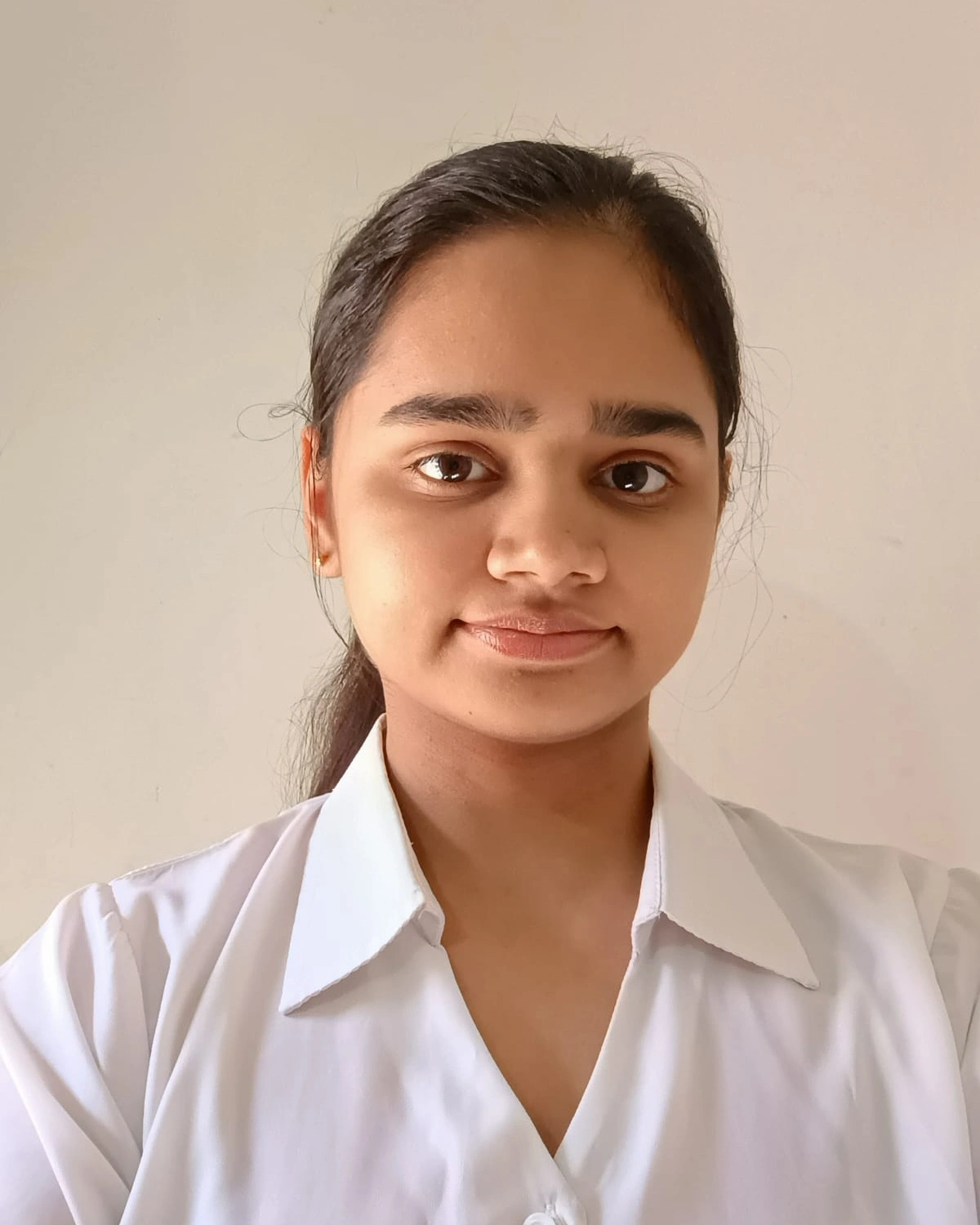
Ms. Muskan
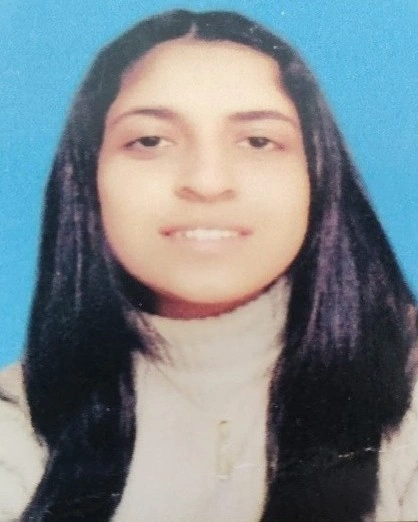
Ms. Kashish Arya

Mr. Om Singh Saini
Previous Year — May 2024
| S.No | Subject | Course Code | Topper Name | Marks |
|---|---|---|---|---|
| 1 | Satellite Communication | PCC-ECE-403G | Abhishek | 63 |
| 2 | Microwave Theory & Technique | PCC-ECE-404G | Ankita | 74 |
| 3 | Embedded System | PEC-ECE-415G | Abhishek | 69 |
| 4 | Solid & Hazardous Waste Management | PEC-ECE-411G | Abhishek | 74 |
Guest Lectures & Expert Talks
The Department of Electronics and Communication Engineering regularly organises guest lectures and expert talks by distinguished academicians and industry professionals. These sessions complement classroom teaching with real-world insights, enabling students to understand practical applications and stay updated with the latest technological advancements.
Objectives
- To provide students with exposure to current and emerging technologies in ECE.
- To bridge the gap between academic learning and industry requirements.
- To enhance practical knowledge and technical skills.
- To motivate students towards innovation, research, and higher studies.
- To create awareness about career opportunities in core and interdisciplinary domains.
- To develop problem-solving and analytical abilities among students.
List of Expert Talks
| S.No. | Speaker Name | Designation | Topic |
|---|---|---|---|
| 1 | Dr. Anil Kumar | Associate Professor | Fundamentals of Electronics and Communication |
| 2 | Ms. Neha Sharma | Embedded Systems Engineer | Basics of Embedded Systems |
| 3 | Mr. Rajeev Gupta | Senior Engineer | 5G Technology and Future Communication |
| 4 | Dr. Pooja Verma | Assistant Professor | Introduction to IoT |
| 5 | Mr. Amit Saxena | VLSI Design Engineer | Basics of VLSI Design |
| 6 | Mr. Sandeep Yadav | Hardware Design Engineer | PCB Design and Circuit Prototyping |
| 7 | Dr. Ritu Sharma | Professor | Signal Processing and Applications |
| 8 | Mr. Deepak Singh | Robotics Engineer | Robotics and Automation |
| 9 | Ms. Kavita Mehta | Software Engineer | Career Opportunities in ECE and IT |
| 10 | Mr. Rahul Bansal | Trainer | MATLAB and Simulation Tools |
| 11 | Dr. Vivek Mishra | Scientist | Antenna Design for Wireless Communication |
| 12 | Mr. Arvind Kumar | Instrumentation Engineer | Sensors and Industrial Instrumentation |
| 13 | Ms. Priya Arora | Cyber Security Analyst | Cyber Security Basics for Engineers |
| 14 | Dr. Sunita Rani | Professor | Smart Cities and IoT Applications |
| 15 | Mr. Karan Malhotra | Startup Founder | Entrepreneurship in Electronics |
Key Learning Outcomes
- Understanding of real-world engineering applications and industry practices.
- Exposure to latest trends such as IoT, 5G, VLSI, Robotics, and Cyber Security.
- Improved technical competency and hands-on awareness.
- Enhanced career readiness and professional development.
- Development of innovative thinking and research orientation.
Student Benefits
- Interaction with experienced professionals and subject experts.
- Guidance on internships, projects, and higher education opportunities.
- Improved communication and networking skills.
- Awareness of industry expectations and skill requirements.
Impact
The guest lectures and expert talks have significantly contributed to the holistic development of students by enriching their academic knowledge with industry insights. These initiatives help students align their learning with current technological trends and prepare them to meet global engineering challenges effectively.
Future Plans
- Organising more industry-oriented workshops and hands-on training sessions.
- Inviting international experts for global exposure.
- Conducting interdisciplinary expert talks in collaboration with other departments.
- Strengthening industry-academia partnerships.
Our Alumni
Our ECE alumni are making a mark across industries — from multinational corporations to government organisations and research institutions. Here’s what some of them have to say about their journey at DPGITM.

A proud alumna of DPGITM, currently working in the Insurance and Healthcare domain. With hard work, consistency, and constant faculty support, I built my career at Cognizant. Special thanks to Director Sir Prof. R.C. Kuhad, Registrar Sir T.R. Narula, Head of Department, and all faculty members.

The strong academic support, practical exposure, and learning environment at DPGITM helped me build my skills and confidence. I am contributing to the AT&T project at Amdocs. I thank the college and all faculty members for their guidance throughout my journey.

Currently pursuing M.Tech from IEEE Delhi. I secured GATE AIR 3643 — a result of hard work and the support I received at DPGITM. The college provided a great learning environment that helped build my technical skills. I thank Director Sir Prof. (Dr.) R.C. Kuhad and the entire faculty.

Selected as Area Service Manager at Panasonic through constant guidance of Dr. Sonu Rana (HoD) and all faculty members. Their support and motivation helped me improve my skills and confidence. I sincerely thank DPGITM for providing the right platform and guidance.

The excellent infrastructure, advanced laboratories, and healthy learning environment at DPGITM helped me strengthen my technical skills. I am thankful to DPGITM and all faculty members for their valuable support and encouragement throughout my studies.

This achievement is due to my hard work and the support I received during my studies. The college’s infrastructure, labs, and learning environment helped me improve my skills. I thank DPGITM and all faculty members for their support.

The labs and practical work in college helped me improve my skills. I thank DPGITM, all faculty members, Management Dr. Preeti Gahlot, and General Secretary Mr. Surender Gahlot for their support throughout my journey.

My journey at DPGITM has been very supportive and motivating. Faculty always guided me and well-equipped labs provided good practical exposure. The management supported us through training and placement guidance. I am truly thankful to all my teachers.
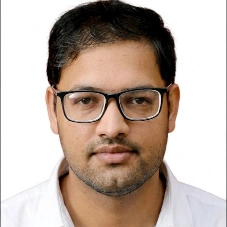
At DPGITM, I got the right environment to improve my technical and practical skills. Faculty members are very supportive and infrastructure provides good practical exposure. With the right guidance and continuous effort, we can achieve our goals.
Syllabus and Scheme of Study
Lecture Plan
ECE-1
| File Name | Download |
|---|---|
| BEEE Subject_Lesson Plan | Download |
| CHEMISTRY LESSON PLAN NEW 2025 for website | Download |
| Lesson Plan 1st sem UHV | Download |
| Lesson plan Maths-I(2025) | Download |
| WT .Lesson_Plan | Download |
ECE-3
| File Name | Download |
|---|---|
| EDC_LP | Download |
| Lesson Plan 3rd sem UHV | Download |
| Lesson Plan_Dsa | Download |
| Network Theory | Download |
| SS_LP | Download |
| evs.Lesson Plan | Download |
ECE-5
| File Name | Download |
|---|---|
| CE LDP BTech ECE5TH SEM-1 | Download |
| DSP_LP_2025 | Download |
| EMW LDP ECE 5th 11.11.25 | Download |
| LIC LDP BTech ECE5TH SEM new (1) | Download |
| Lesson plan COA(ECE) 5TH | Download |
| Lesson_plan_2025_oops | Download |
ECE-7
Previous Year’s Question Papers
ECE 3rd Sem
| Title | Download |
|---|---|
| Signal and Systems Feb 2022 | Download |
| Network Theory Feb 2022 | Download |
| Digital Electronics Feb 2022 | Download |
| Electronic Devices Dec 2022 | Download |
| Signal and Systems Dec 2022 | Download |
ECE 4th Sem
| Title | Download |
|---|---|
| Engineering Economics May 2023 | Download |
| Analog Circuits May 2023 | Download |
| Communication System May 2023 | Download |
| Digital Electronics May 2023 | Download |
| Electromagnetic Fields May 2023 | Download |
| Microcontrollers May 2023 | Download |
| Signals & Systems May 2023 | Download |
ECE 5th Sem
| Title | Download |
|---|---|
| Electromagnetic Waves Dec 2022 | Download |
| Communication Engineering Mar 2021 | Download |
| Digital Signal Processing Feb 2022 | Download |
| Linear Applications Mar 2021 | Download |
ECE 6th Sem
| Title | Download |
|---|---|
| CMOS Design May 2023 | Download |
| Computer Network May 2023 | Download |
| Control Systems May 2023 | Download |
| Ethics May 2023 | Download |
| Electronics Design Laboratory May 2023 | Download |
ECE 7th Sem
| Title | Download |
|---|---|
| Fiber Optical Feb 2022 | Download |
| Mobile Communication and Network Feb 2022 | Download |
| Wireless Sensor Networks Feb 2022 | Download |
| Antenna and Wave Propagation Feb 2022 | Download |
| Data Communication Networking and Security Feb 2022 | Download |